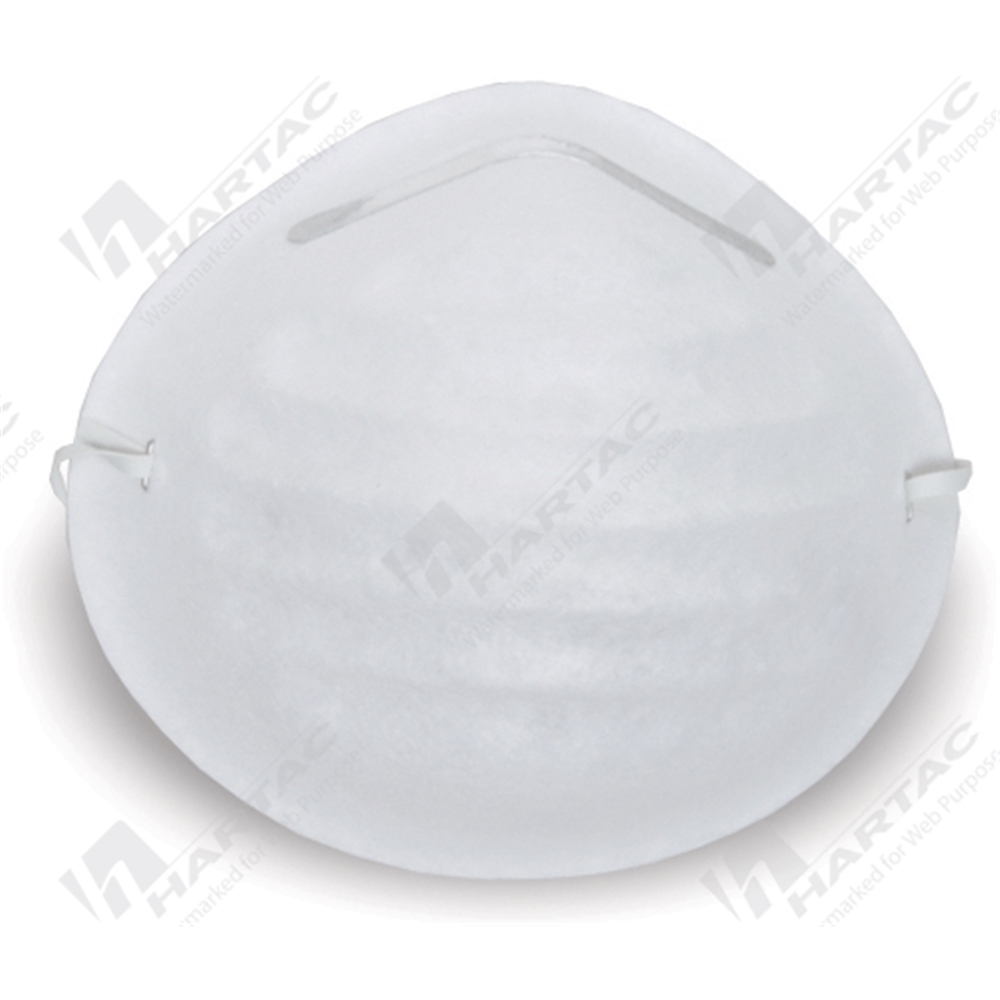
Dusts and Dust Masks
In any industry where employees are/will be exposed to air with toxic substances or irritants, choosing the right respiratory protection is important. It will prevent or control the exposure to toxic substances that may cause respiratory health problems. Any part of the respiratory tract can be affected. Rhinitis and laryngitis are caused by large particles deposited in the nose, pharynx, and larynx or by more soluble gases are absorbed by upper respiratory tract mucous membrane, causing oedema and mucus hyper secretion. Asbestos fibre can cause cancer (asbestosis) when it comes in contact with the bronchial epithelial cells. It causes mutations in proto-oncogenes and tumor-suppressor genes.
In selecting the correct respiratory protections, these factors should be considered such as contaminants or atmospheric hazards, tasks and people who worked in the tasks. There are several atmospheric hazards that may affect the workplace and the people within it. These hazards are particulate contaminants such as dust, fibre, mists, fumes or dirt, gaseous or vapour contaminants such as solvents, paints or pesticides and lack of oxygen.
Dusts can be an occupational hazard. It is solid particles dispersed in the air and may be respirable or non-respirable. In a work environment, dusts that can be found are mineral dusts, metallic dusts, other chemical dusts, organic and vegetable dusts and biohazards. Air Purifying Respirators (Particulate Respirator), that is dust mask, can be used to filter the dusts and to avoid inhalation. Particulate filters are rated based on what and how much it filters out. The rating is a combination of a letter and a number. N means not oil proof, R means oil resistant (up to 8 hours) and P means oil proof (beyond 8 hours). The number corresponds to the percentage of how much particles it can filter. It can be 95, 97 or 100. Dust masks are commonly rated as N95 which means it filters 95% of airborne particles. There two types of particulate respirators, the disposable respirator and respirator powered with replaceable filters. When choosing a dusk mask, the mask should have an adjustable nosepiece that offer a tighter fit. If using a disposable mask, make sure that it has foam face seals that offer more comfort and more effectivity. If you are using a mask with replaceable filters, the service life of the filters is dependent on the conditions of use. This is defined by the consumption of air by the user, the humidity of air, the temperature and the contaminants in the air.